Pride is Suicide Prevention
Pride is Suicide Prevention
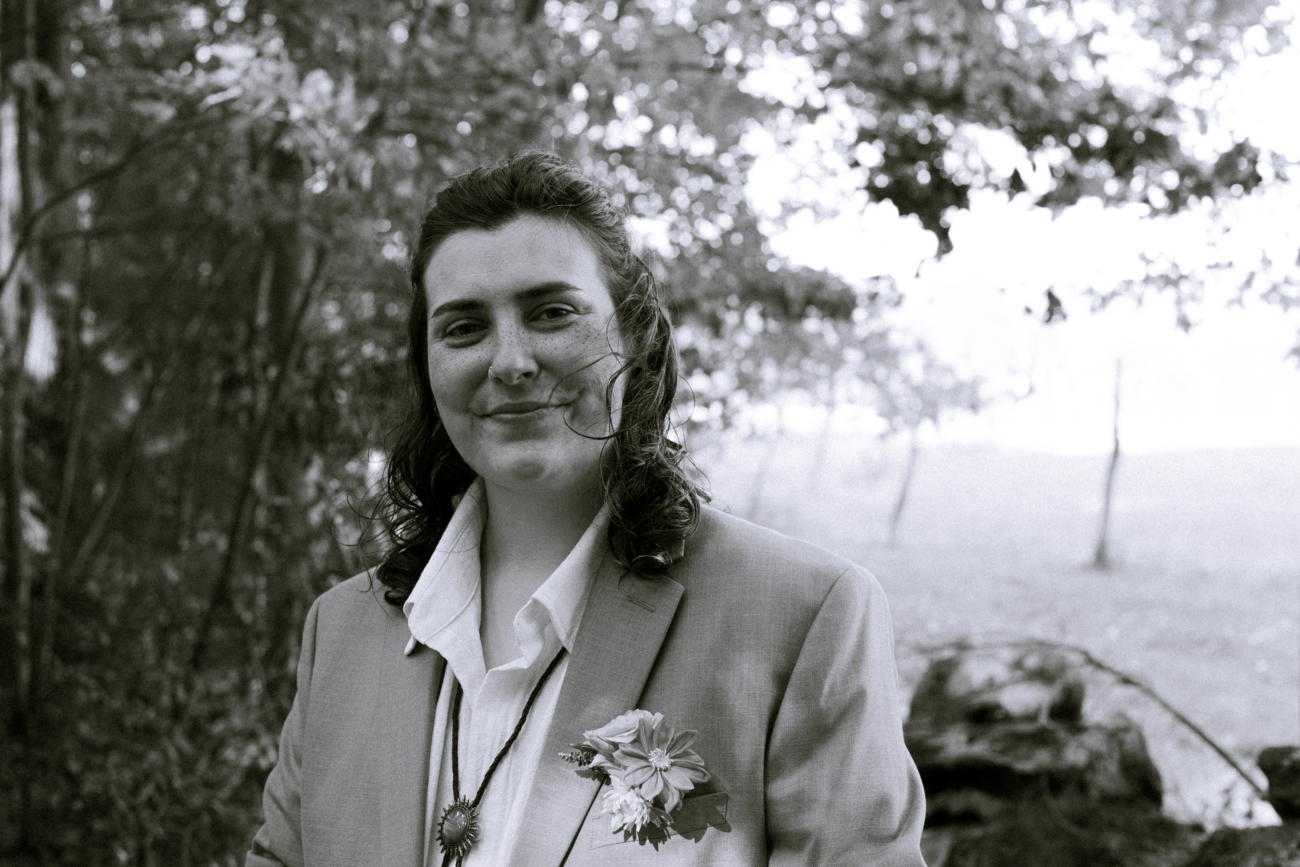 Hi, my name’s Kyl (they/them)
and pride is important to me because for my whole life until I was in my 20’s, I thought something was wrong with me. When I was 8, I first felt gender dysphoria. I had grown up with several younger sisters who were all typically “girly”. I wore basketball shorts, a big T-shirt, and my hair tied back in a low pony tail. I always felt different. When my body started developing I quickly also developed anxiety. Not the kind of anxiety that’s rooted in a problem, but the kind of anxiety that lives in your chest and slowly sinks and sinks until you feel every step is heavy. I was only 8. 8 years old and I started to feel like the world would be better off without me. As my chest grew, I refused to wear a bra. I didn’t feel like I needed one. I didn’t feel like a girl, and my body didn’t match how I felt. The heavy feeling in my chest turned to panic, and as I continued to grow, I continued to spiral deeper.
At the time, I hadn’t known any trans people. This was about 2006, and I lived in a small town in MA. I didn’t even know any gay people. I didn’t have the words to describe the heaviness, the dysphoria, the constant state of fight or flight over how my body looked. I was teased in elementary school; they’d call me “butch” or “manly” but those words didn’t actually hurt me. It hurt that I was being singled out, but not the words. I was kind of honored to be called manly. I played on an all boys hockey team and considered myself tough, I was good at the sport and I felt strong when I was playing. Manly wasn’t an insult to me, it was a compliment. That’s when I realized that I was different.
Years passed into middle school, and I tried to be hyperfeminine to hide how I was really feeling. I tried to dress “girly” and found myself trying to make girl friends instead of guys. This lasted up into highschool. In highschool, I was forced for the first time to play all girls hockey. I had only played boys hockey until 9th grade. A part of me had always felt so comfortable with the boys, like this was where I belonged, so I was scared. I joined the girls team and played second line my freshman year. I was always a rough player, but in boys hockey you could be. For four years I played on the girls varsity team, and I continued to play rough and hard. Part of me felt like I was resisting femininity by playing very physically, and I ended up getting a lot of penalties, including sending another player to the hospital on a stretcher. My anger rose as I surfed my highschool years. I felt like I was drowning having to protect who I really felt I was.
I graduated high school, and went to college in Maine, and then Hawaii. I ended up with an internship with a company in Orlando Florida. I was still struggling with how I felt inside, and how heavy my gender dysphoria was. I went to work for this company, I became the most depressed I had ever been in my life. I was forced to wear a dress everyday as part of my costume. Every day felt like I was being burned from the inside out. One day I came home, and I had had enough. I was in my Orlando apartment alone, and I attempted to take my life. When I woke up the next day, I realized I needed a change. I sent an email quitting, and hopped on a $40 plane home to MA. I needed to find myself.
I got home and returned to a waitressing job. I was just trying to make enough money to get back to Hawaii and start living my life for me. One night at work, my anger issues got the best of me, and I punched my hand through a wall and broke almost every bone in my right hand. Eventually it required multiple surgeries, screws, hand reconstruction surgery, and months in a cast, almost a year. I had a lot of time to think about who I was and my actions. I decided I wanted to live for me.
When I was 22, I decided I was done. Done living as a girl, done living as someone i wasn’t, done being angry. I found a community of queer people and finally I had felt like I found myself. Someone had told me “you don’t need to be a boy or a girl, why did you think you needed to choose?” and that healed me. These were people who didn’t care who I was. They loved me for me. They wanted me to be happy. At that time, “they/them” was introduced to me, and I had never felt more at home. I’m not a girl, but i’m not a boy. I’m neither. It made so much sense. This is how I had been feeling my whole life. Something clicked in my brain. I started to see myself for who I was.
I cut my hair, and eventually was able to have a gender affirming mastectomy. Since then, I have never felt more whole. When i was 18, and graduating high school, everyone was talking about what they wanted to be when they grew up, and I never had an answer because I didn’t plan on living that long. After I had my mastectomy things came together for me. What I wanted to be when I was older? Alive. And happy. For the first time I wanted to live. I wanted to tell others that were feeling this way that it isn’t just black and white. You don’t need to be one thing or another. You do not need to fit into the binary. Not knowing that nonbinary people existed and that I wasn’t the only person feeling this way saved my life. Now, I want to save others.
Pride is so important because no matter who you are you deserve love and acceptance. I wish I could tell my 8 year old self that help was coming. I wish I could tell myself to be myself. There’s no other way to put it that the queer community saved my life.
I’m now married to my beautiful wife Emma, and we have a dog and three cats. I identify as trans masculine and nonbinary. I am an emergency veterinary nurse and a mental health peer mentor. I never saw my life having such importance. I never saw myself as important. That’s why pride is essential. No one is alone. Even if they feel alone. I would give absolutely everything for no child to ever feel the way I did. I continue to advocate for queer trans youth to give those the opportunity to have the voice I didn’t have. Whether you’re a parent, teacher, student, sibling, friend, remember that your support can be the difference between life and death. And yes, it is that serious. We must continue to support one another and provide safe spaces for youth to grow into the authentic versions of themselves that they deserve to be.
Please check in on your friends. Please encourage open conversations.
Please support your children.
Use pronouns.
Ask questions.
You are the future.