Connecting Body and Mind
Connecting Body and Mind
By
John J.W. Oxenford
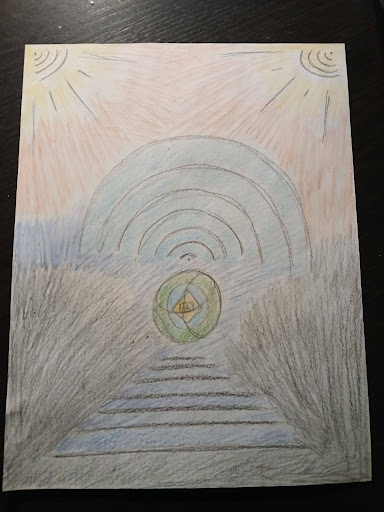
Hello, I’m John J.W. Oxenford, and I’ve worked with The NAN Project for 6 years as a Peer Mentor. In this blog, I will elaborate on my efforts in connecting with body and mind. This will involve my interests in music, acting, fitness, and meditation. Those activities relate to my effort in connecting with my emotions, and the intent of this blog is to help those who might be interested in finding a similar connection.
At eight years old, I began acting on stage, and, after graduating from CRLS in 2007, studied acting for a year at Boston University. One of the teachers at BU had given me feedback, her perception being that my acting seemed to come mainly from the mind, and not from the heart. She suggested trying to find characters starting with an emotional base. I kept that advice in mind as I left school to try to go professional into the acting world. However, after experiencing a wave of depression, stemming from my mental distortions of schizophrenia, I stopped acting and went back home. Eventually, the diagnosis was schizophrenia, and medications were prescribed to help me recover. Even though my interest in professional acting left, the experience of the advice from that teacher at Boston University still stayed with me.
Moving to the present, in 2024, a newly found friend gave me the opportunity to be a co-host on their Cambridge Community Television show (one that I now host myself) called, A Human Amongst Humans (AHAH). Its subject matter is in spirituality, communication, being human, and exploring world peace. We even explored the relationship between the Earth, other Planets, Galaxies, and the Universe. One day, this friend described on the show how he tried to get out of his head and into his heart. He explained that he too, in the past, had difficulty connecting with emotions. These words reminded me of the advice of the teacher, and since then I have been on that journey. Questions started to arise, “Why drop out of school?” “Why not communicate with friends and family?” “Why feel a separation between other people?”… Surely there was a reason for all of this isolation… Maybe, my emotions could explain such a disconnect.
I’ve rarely perceived myself as an emotional person. Yes, there are times when I’m happy, times when I’m sad, tell jokes, try hard in sports (or working out), even discovering a character on stage. However, emotions always seemed to arrive as though they’d been stored up for a long time, just waiting to happen. As though emotions weren’t regular for me, as though they were moments of sudden self-realization. Emotions seemed to be a separate consciousness, like there was something other people were experiencing, that I wasn’t… People seemed to be in a constant state of awareness with what they were feeling… and I often just felt blank. Was there a way to experience what they were feeling too? So a quest started: To Find The Emotions. Maybe they didn’t need to be called up on stage with a great monologue… Maybe they didn’t need to come from scoring a huge goal on the soccer field… Maybe they just needed a safe environment to communicate.
People used to ask me, “what are you thinking?”, and I would say, “nothing,” because life was reasonably simple for me. The world was basic, I wasn’t used to thinking thoughts that seemed relevant enough to talk about… However, the world seemed to become more alive around the time I was 25. Inspirations of thought would show up, throughout the day, every day. It was a new experience, my mind was trying to find different ways to define the world around it. This change may have come from psychosis, schizophrenia, and even the medications that increased my awareness of my mind. I was constantly trying to sense the effects of these symptoms and these medications, so there was actually so much activity going on in my mind now that I became almost entirely cerebral.
Music
Having played music since I was in 6th grade, I have found a broad palette for my emotions. Two sides of extremities, death metal or post-rock. I play guitar, and I uploaded my 8th Demo (Demo 7, the second demo being a remake of the first) in 2026, onto SoundCloud. The project is called, [Metal] (Meditations), and it started in 2022. It began because a friend of mine, a musician himself, encouraged me to put music out into the world. He told me of a studio (Chillhouse Recording Studio) where I could get my demos recorded, and Will at the studio has helped me ever since.
The project began as extreme metal, however, 7/8 demos later, my musical palette has diversified, and includes entirely acoustic tracks, some rock and groove riffs, and themes that relate to fitness, dedication, redemption, mental health awareness, and world peace. Playing and composing music more consistently has been a game changer in how I spend my time. Uploading music onto SoundCloud has helped me reach people all over the world.
As used in my project’s name, punctuation can be a way to express emotions in writing. Using commas and periods, dashes and parentheses, to score writing, grammar is a good tool to express emotions. For [Metal] (Meditations), I use brackets to convey the heaviness of metal, and parentheses signify more meditative frequencies. This is something, if I ever went back into acting, that I could also use to score a script, to identify a character’s emotions (something that may be useful advice for any actors out there.)
Another Demo I uploaded was Demo 6 in the summer of 2025, and it is based on non-violence and world peace. It is called Demo 6: (Manifesting a State of Peace) [Stopping the Violence of an Evil Entity]. It starts with a song called, “The Enlightened Mind Found Through the Storm of Redemption”, that has some chords similar to ones that used in Demo 2; then it goes into a scale pattern that I am sure I did not create, yet found for myself without any help of a teacher (or research online); distorted rhythmic riffs of the track signify elements of a storm; next are a few riffs in black metal tremolo, emphasising the feelings of the storm and the light of dawn as the storm subsides. Next track is composed of about 20 riffs, based in the death metal style, expressing the transition from anger and aggression to the uplifting catharsis of recovery and celebration. After a quick scale interlude, the demo continues with a song based on groove riffs that bring a different rhythm to the work, titled, “Defending the State of Peace.” The demo ends in an acoustic, contemplative passage, called, “(an individual one with the earth)”, that symbolizes the healing feelings of peace.
In 2025 I decided to upload videos of myself playing my songs onto Instagram. I started, focusing on ‘not messing up’ – yet what I saw was an expression of stress. Deleting that video I tried again, to relax, and express my love for music. In the second video there was an expression of enjoyment and love for the craft. Guitar can help find a sound for emotions, and if I ever am tired, bored, afraid, or depressed, my guitar helps me find sounds for emotions in riffs; those riffs can turn into songs; and I find understanding in the language of the instrument. Music is another way for my inner voice to speak.
Acting
One of the moments I will always remember, as an actor, was being able to play a main character in Sophomore year of High School. Being involved in acting since 8 years old, I got some main roles in 7th / 8th grade, however it wasn’t common for a Freshman or a Sophomore student to get a main role in Cambridge Rindge and Latin School. So when they gave me one of the two main characters – in the play we would be taking to the Massachusetts High School Drama Festival! – I was motivated to give this opportunity all that I had.
The character was Jason, and the play was Medea, by Euripides. It is a wrenching tragedy, involving infidelity and murder. It took a lot of effort, and it was important for me to make some space between the role and myself, so that I did not get caught up in the tragic emotions. However, there was a monologue at the end of the play that felt so powerful, because I was able to bellow out to a vast audience, and express freedom in being an actor, and dedication for the craft.
Ironically, there was a great contrast between performing the monologue, and the actual fate of the character, as he lost everything at the end of the play. When I remember that time, I think about what the effect plays and roles have on actors… An actor must be able to do their best in performing a character, and yet be able to maintain their own composure and stability in their personal life.
In contrast (to that contrast) the second most validating monologue I ever played was of the character Sebastian, of Shakespeare’s Twelfth Night. The play is a romantic comedy, about being lost in foreign lands and discovering unexpected love and making friends with enemies. Sebastian was a lost sailor, finding himself wooed by a queen, losing his sense of fear, in the awe of passion. Playing this character – at first in Middle School, then for The English Speaking Union’s Shakespeare Competition (at age 15), and then for college auditions – I experienced the joy of being able to swim in these healing emotions getting lost in a romantic comedy, not to mention how far the work brought me in my work as an actor… It was a gift I will always remember.
Freeing the Natural Voice, by Kristin Linklater, is a book I finished reading a few years ago. The book was assigned in Acting Class at Boston University. The author shows how the actor (or anyone else who decides to read the book) can become aware of their body. It helps a person awaken their emotions, and find freedom in relaxing barriers stored in the body that had been developed in the past, hindering the person in their emotional growth. I’m not striving to master techniques for portraying a character on stage anymore, but this book really helped me in creating a safe place for my emotions. Books like Freeing the Natural Voice can help people understand ways to lower barriers of fear and stress, connecting with what Linklater calls, the inner voice.
Fitness
Fitness is an important factor in keeping the body, mind, emotional state, and even spiritual state alive. Mom introduced me to soccer at eight years old, through this I got different perspectives playing for a different teams every year (in Cambridge Youth Soccer). That was my main source of fitness for me back then, it wasn’t until I was around 25 years of age that the importance of physical fitness dawned on me. I started changing things around when I entered Senior year of High School… things like not trying out for the school’s soccer team – or auditioning for the school play – were drastic changes. However I did explore new things, like dance, and got more serious with guitar in a band… even still these drastic changes would later have a negative effect.
By the time I was into my mid-twenties the negative effects of these changes became apparent, and searching for a healthy practice would get me back on track. Through encouragement from mom, working out at the gym was the first step. At first, looking in the mirror, I saw… muscles… appearance… Going to the gym, beginning with cardio on the treadmill… blood circulation… breathing… Once I got that under my belt other things become more important… weight, diet, and maintenance… My appearance starting to improve and a new communication began with myself. Putting in honest effort, seeing changes almost immediately, self-validated through honest dedication became new emotions. A new voice began to speak to me. Now, a workout in the morning, and consistent fitness throughout the week, completely changes every day, with feeling more alive, aware, and in balance.
Fitness is something that determines the trajectory of the day. A sedentary existence is something I know all too well. Sure, some screen time is fine, but if that is the only thing in the day these emotions aren’t as alive as they would with a workout. In fact, that was my state of being for a good part of my life; through getting used to depression and getting comfortable with sitting down, the enjoyment of being alive, outside left me. However, observing friends and family who enjoyed their lives in activity, physically and socially, I realized that in order to wake up and feel joy, getting out of ‘depression’s comfort zone’, was necessary.
In 2024 I took a class at Boston University that focused on training the students to pass the National Strength and Conditioning Association’s test, that would later get them the certification to become a personal fitness trainer. The NSCA’s Essentials of Personal Training said that people (even those who are reaching their later years in life) can reverse defects of inactivity – significantly – by making the decision to be active in their everyday life. So, in inspiration from this proven fact, it is important to make the decision to go out and live! And the more I live, the more I enjoy the experiences of living. The days when I pull myself out of sitting down, and go out for a walk or for a jog, or the gym, or to a friend, help me realize that life is a worthy gift worth living. Maybe living actively shows the greater powers that we are thankful.
Meditation
Meditation (at least stillness meditation) has not been easy for me. Being heightened to peaceful awareness requires a lot of effort… or, lack of effort, as many trainers say. About 7 years ago, I explored mindfulness meditation, attending guided meditation sessions. I would sit there, with my eyes closed, about 30 people in the same room, mentally walking through the introduction told by the teacher, I found it difficult to concentrate. In silent meditation my mind tended to go on fast pilot – like ADHD in 5th grade… Difficult to concentrate, uncomfortable, just sitting there, the urge to do something else, yet not having any idea of what that might be… However there are other forms of meditation: to music, writing, walking, or even exercising. Practicing awareness and enjoyment of the current moment helps keep the mind at peace.
In walking meditation I first become aware of the outside; the cars, the airplanes, the people, the elements… Maybe that is just where the mind goes naturally, maybe there is a deeper place to go in connection with the inner self… A place to feel safe and comfortable is important, so location is an important factor. Sometimes I feel as though the emotional part of me is testing its external environment to see if it feels safe, in order to be able to be alive and speak. Maybe it just needs a safe opportunity.
Through struggling with schizophrenia, mental fear is something that I have experienced. It often happens in the afternoon. The outside world is angry, and everyone is dangerous, some powerful force is out there and nothing is safe. The rules of meditation leave, and my breathing becomes shallow, as thoughts of worry appear. The advice in meditation is to breathe, and let the moment be, as thoughts occur, and then move on. In Linklater’s book she teaches the reader to free themselves from the tensions that block their life energy, to try to make a clear path from the mind to the body, or the body to the mind. So I am trying to become more comfortable with using these calming techniques, and testing if the fear will actually last.
However, there are good days, and I can be in a state of celebration! Walking on a beautiful day, grateful and inspired, enjoying the feeling of peace. These sensations are states of mind that determine my states of being at the moment. Maybe these are states of emotion, and my interpretation of what they should be is just different than the way things actually are. And the more I accept and complement them, the more I may be able to reach these emotional states and enjoy them instead of worrying about what they should be. And so, I practice to connect these sensations, from my mind to my body, and give my emotions a comfortable place to be.
Conclusion
The path I am on now is alive and well balanced. I give my emotions permission to live this life. It’s ok to start slow. I remember starting to do push-ups (after recovery in hospital); only do 5 at the start, yet the ambition was a reward in itself. Eventually the pushups counted to 10, and a daily 30 minute jog added itself. Now I am able to do a lot of things; jog for up to an hour, 20 pushups a day, and I have a workout group that meets every Sunday, pushing me harder than ever before.
Be proud of the accomplishments you have pushed yourself to achieve. Be aware of the sounds, physical, and mental sensations, connecting to the world around you. The NAN Project helps me work on my public speaking skills, alive through every presentation. I am also investing a lot more effort, creativity, as I create and enjoy music. The last lesson is consistency. Don’t be discouraged if you don’t meet your greatest goals every day. Strive to put some form of effort into it every day, and communicate with the mind, body, spirit, and emotions. Life, yes, can be difficult at times, but is so worth living, and sometimes we just need to push ourselves past the bad times, as we know it will get better in the future.

The blanket of emotions

All the riffs that can be found in music
Connecting to inner self in meditation
Kicking a soccer ball on the field