“Support Has to Feel Human”: A Conversation With Nicole, Our Bilingual Clinician
“Support Has to Feel Human”: A Conversation With Nicole, Our Bilingual Clinician
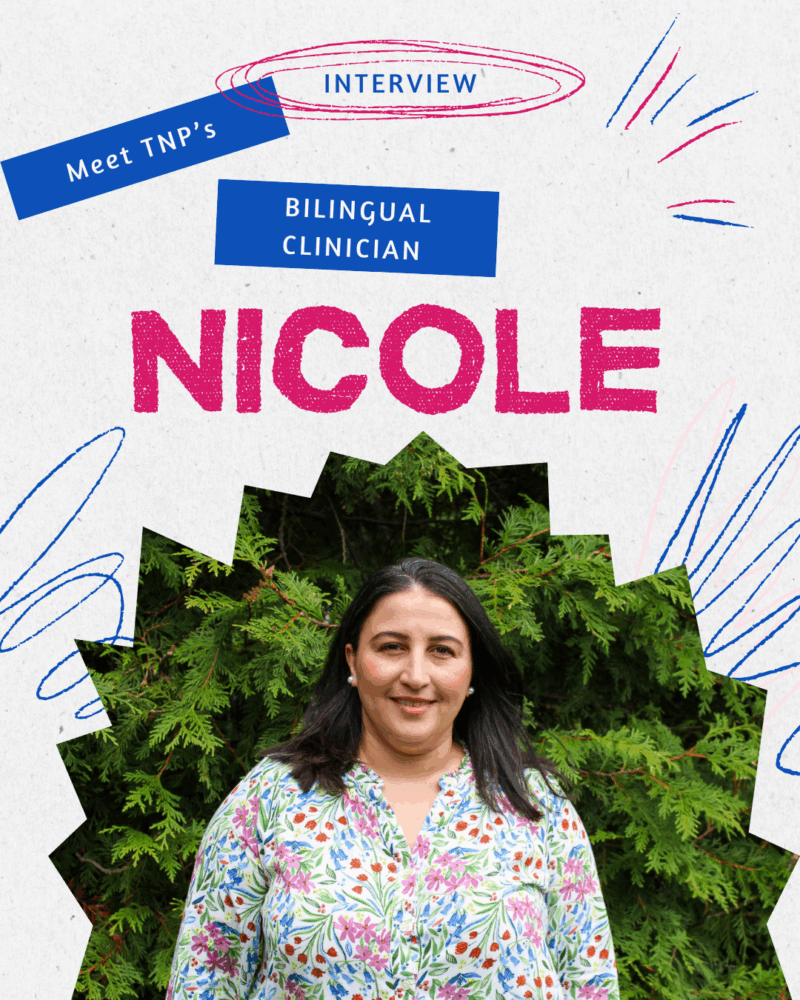
On any given day with The NAN Project, Nicole moves quietly but intentionally through schools and community spaces. As a bilingual clinician serving primarily Spanish-speaking families, her approach to mental health care is rooted in trust, accessibility, and cultural understanding.
“My role is to support individuals, families, and peer mentors, mainly Spanish-speaking, by providing emotional guidance, psychoeducation, and clinical support when needed,” Nicole said. “A big part of my work is making sure support feels accessible, respectful, and culturally relevant.”
Her days often involve meeting with families, collaborating with schools and community partners, supporting peer mentors, and helping connect people to appropriate mental health resources. “A big part of my work is making sure support doesn’t feel intimidating,” Nicole explained. “It has to feel human.”
Nicole’s path into psychology and neuroscience began with a curiosity about human behavior, emotions, and how life experiences shape us. “I’ve always been interested in understanding human behavior, emotions, and how life experiences shape us,” she said. “Neuroscience added another important layer to my training, especially in the area of evaluation and diagnosis. Psychology and neuroscience come together when I support individuals and families by considering emotional experiences, brain development, and developmental processes. This approach allows me to provide more comprehensive and informed support, especially when working with children and their families.”
Much of Nicole’s training focused on supporting families who have a child with a developmental disorder. “I have focused mainly on supporting families who have a child with a developmental disorder, helping them understand their child’s development, strengths, and needs,” she said.
Before coming to The NAN Project, Nicole worked in a hospital in the Dominican Republic, an experience that continued to shape her approach. “Working in a hospital in the Dominican Republic taught me to look at mental health in a very holistic way,” she said. “Many patients faced social, economic, and family stressors in addition to medical concerns. That experience helped me understand the importance of compassion, flexibility, and meeting people where they are. It also reinforced how important it is to work as part of a multidisciplinary team and to see mental health as connected to overall well-being.”
Her Dominican background and multicultural upbringing informed her connection with Spanish-speaking families. “Coming from the Dominican Republic and from a multicultural family has helped me understand the diversity within Spanish-speaking communities,” she said. “I also lived and worked in Punta Cana, a very diverse area due to tourism, where I was exposed to people from many different cultural backgrounds. Working in that environment taught me the importance of listening, being open, and adapting to different perspectives. In addition, my experience studying in Spain and Argentina allowed me to become familiar with different accents, expressions, and cultural approaches. These experiences help me approach my work with humility, cultural sensitivity, and respect. This shared background often makes it easier for families to open up and trust the process.”
Nicole emphasized the importance of culturally and linguistically responsive care. “Culturally and linguistically responsive care is important because people feel safer and more respected when they are understood in their own language and cultural context,” she said. “Mental health can already feel intimidating, and language or cultural barriers can increase fear or misunderstanding. When care is culturally responsive, families are more likely to engage, ask questions, and follow through with support.”
Her experience in psychological and developmental assessment reinforced the value of early evaluation. “Early evaluation is important because it helps identify strengths and needs as soon as possible,” Nicole said. “When challenges are identified early, families and schools can provide the right support at the right time. Research has shown that early detection and timely intervention can have a positive impact on a child’s development, learning, and emotional well-being. Early evaluation also helps families better understand their child, reduce uncertainty, and advocate more effectively for their needs and services.”
Language plays a crucial role in her work. “Providing care in someone’s first language allows for clearer communication and deeper understanding,” Nicole said. “Families can express their concerns more accurately, and children feel more at ease. This builds trust and reduces misunderstandings, which is especially important during assessments where details, emotions, and experiences matter.”
When asked about the most rewarding part of her work, Nicole said, “The most rewarding part has been seeing families feel empowered and supported. Many families come in feeling overwhelmed or unsure, and being able to help them feel heard, understood, and guided is very meaningful. Seeing growth, relief, or increased confidence in families and individuals reminds me why this work is so important.”
She also acknowledged the barriers Spanish-speaking families often face. “Some common barriers include language differences, limited availability of services in their native language, lack of information about available resources, stigma around mental health, and difficulty navigating complex systems,” Nicole said. “I help bridge these gaps by providing information in Spanish, explaining processes step by step, validating their concerns, and connecting families to trusted and culturally responsive resources. Building trust and reducing fear is key.”
Her message to families and the community is clear. “Mental health support is not a sign of weakness—it is a sign of care and strength,” Nicole said. “Asking for help means you are taking care of yourself and your family. You don’t have to do everything alone, and support is available.”